
The rupee gained 17 paise to trade at 91.41 against the US dollar in early deals on Friday, as investor sentiments improved after US President Donald Trump stepped back from tariff threats against Europe linked to Greenland, easing immediate trade-war fears. Forex traders said Trump's softer rhetoric reduced near-term geopolitical anxiety. Moreover, as investors' risk appetite improved, the dollar corrected, allowing emerging market currencies including the rupee to recover slightly, they said. At the interbank foreign exchange, the rupee opened at 91.45 then gained ground to trade at 91.41 against the greenback, up 17 paise from its previous close. On Thursday, the rupee rebounded from its all-time low levels and ended with a gain of 7 paise at 91.58 against the US dollar. Forex traders, however, said the currency remains under severe pressure from persistent foreign fund outflows amid heightened global geopolitical uncertainties. The pending trade agreement with the US remains a key stabilising factor. Until the geopolitical risk eases and the trade deal materialises, the rupee is likely to remain vulnerable to external shocks, they said. "At current levels, a large portion of global risk appears to be priced into the rupee. This opens the door for a phase of consolidation and a possible partial recovery if risk sentiment stabilises." "The 92.00 level remains a strong resistance, while sustained RBI support could guide USD/INR back toward the 90.50-90.70 zone in the near term," CR Forex Advisors MD Amit Pabari said in a research note. Meanwhile, the dollar index, which measures the greenback's strength against a basket of six currencies, was trading 0.01 per cent higher at 98.36. Brent crude, the global oil benchmark, was trading 0.87 per cent higher at USD 64.62 per barrel in futures trade. On the domestic equity market front, Sensex fell 25.99 points to 82,281.38 in initial trade, while the Nifty rose 10.55 points to 25,300.45. Foreign institutional investors offloaded equities worth Rs 2,549.80 crore on Thursday, according to exchange data. This story has been sourced from a third party syndicated feed, agencies. Mid-day accepts no responsibility or liability for its dependability, trustworthiness, reliability and data of the text. Mid-day management/mid-day.com reserves the sole right to alter, delete or remove (without notice) the content in its absolute discretion for any reason whatsoever.
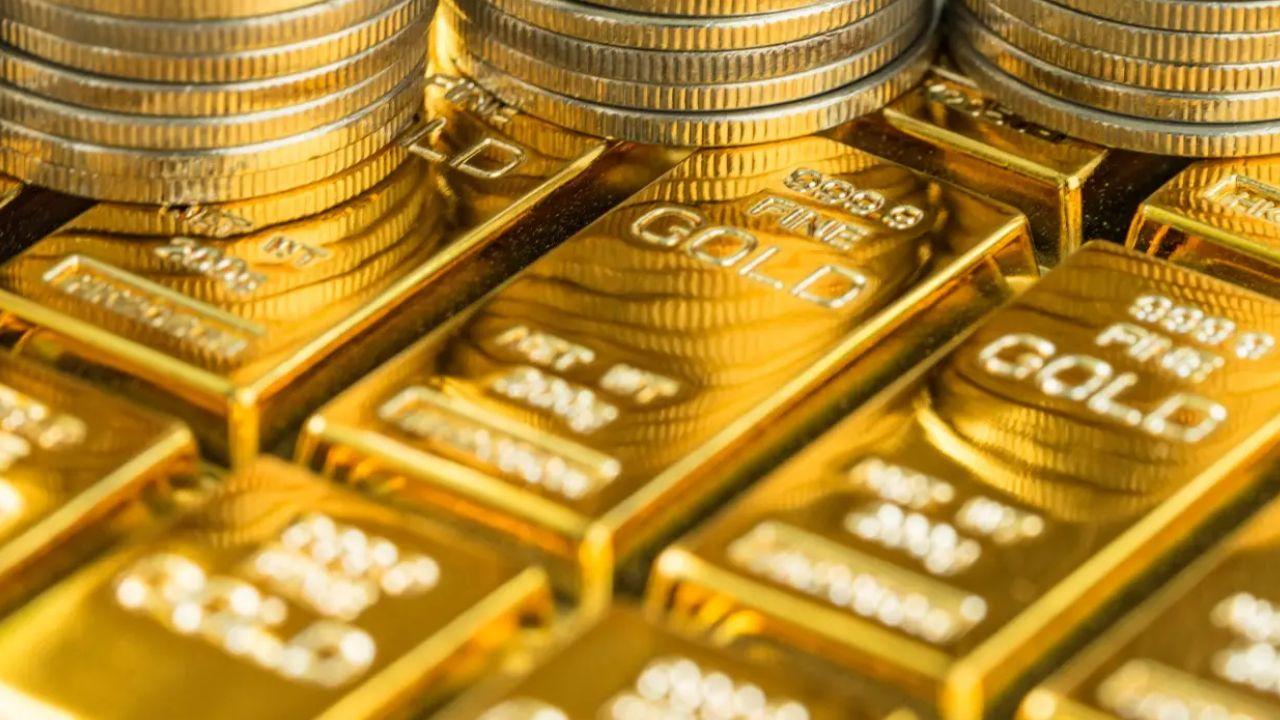
23 January,2026 11:26 AM IST | Mumbai | PTIGold futures on the MCX dipped close to 1 per cent in the last two days from a record high in the previous session due to profit booking. The sudden dip in gold prices is mostly because of the easing of geopolitical tensions and the strengthening of the dollar. While things between the United States and the European Union have been easing out since Wednesday after US President Donald Trump softened his tone on the acquisition of Greenland, the prices of the yellow metal on Friday were recorded at Rs 1,56,750 for 10 grams. MCX gold February futures dipped 0.78 per cent to Rs 1,51,665 per 10 grams. Whereas the MCX silver March futures dipped 0.62 per cent to Rs 3,16,509 per kg, as per IANS. Gold rates also dropped in the international futures market, with US gold futures consolidating near USD 4,790-USD 4,800 per troy ounce after registering a fresh record high above USD 4,887 earlier in the week on COMEX. Gold prices in Mumbai The price of the yellow metal in the financial capital on Friday was recorded at Rs 1,56,750 for 10 grams of 24-carat gold. Whereas, the price of 22-carat gold was recorded at Rs 1,43,700 for 10 grams. While the prices did see a slight dip as compared to the last few days, the demand during the upcoming wedding season is likely to be more for the yellow metal. Gold prices in Delhi The national capital on Friday also saw a sudden dip in prices of gold after the global conflicts hinted at easing out. While the demand for the yellow metal is high, the price of 24-carat gold in Delhi stood at Rs 1,56,890 for 10 grams. While the 22-carat gold in Delhi was sold at Rs 1,43,840 for 10 grams. While commenting on the gold prices, various analysts said that the current dip in gold prices reflects healthy profit-booking amid easing tariff fears, but the broader uptrend remains powerful, as per IANS. Silver Prices While the gold in the commodity market experienced nearly a 1 per cent dip in the last two days, prices of silver, on the other hand, did remain almost unchanged. On Friday, silver prices in the Indian market stood at Rs 3,47,100 (With inputs from IANS)
23 January,2026 10:06 AM IST | Mumbai | mid-day online correspondentAmid the global turmoil, gold futures on the MCX surged over Rs 4,100 in the last couple of days to a fresh record high. While the gold on the MCX experienced a sudden spike, investors jumped to buy safe‑haven assets amid fears of a widening US‑EU trade conflict and a softer dollar. As reported by news agency IANS, MCX gold February futures rose 4.25 per cent to Rs 1,56,970 per 10 grams. Whereas, MCX silver March futures rose 2.71 per cent to Rs 3,32,451 per kg. Gold price in Mumbai Apart from the MCX, the gold prices in Mumbai on Thursday were recorded at Rs 1,49,930 for 10 grams of 24k gold. Moreover, the demand for the yellow metal still stays constant amid the sudden surge in prices. On the other hand, the price of 22-carat gold in Mumbai stood at Rs 1,37,450 for 10 grams. The price of 18-carat gold stood at Rs 1,12,447 for 10 grams. Gold prices in Delhi The prices of gold in Delhi also experienced a sudden surge in the last few days; while the prices in Mumbai almost touched the Rs 1.5 lakh mark, the 24-carat gold in Delhi was priced at Rs 1,50,050. The 22-carat gold in Delhi on Saturday stood at Rs 1,37,590 for 10 grams. International markets also saw new peaks as US gold futures jumped to USD 4,849 per troy ounce on COMEX. While the COMEX silver consolidated in the USD 92.5–USD 95.7 range. Tariffs imposed by US The rally followed reports that the United States plans tariffs on eight European countries from February 1 and could raise duties to 25 per cent in June. European countries are reportedly considering anti-coercive measures, using trade defence mechanisms designed to counter economic pressure from foreign governments, as reported by IANS. Silver prices In MCX silver futures, immediate upside targets are placed at Rs 3,30,000–Rs 3,32,000, with scope to extend toward Rs 3,35,000–Rs 3,50,000. Whereas the prices of silver on Saturday stood at Rs. 3,30,000 per kg. Safe-haven flows, central bank accumulation, geopolitical risks, and expectations of accommodative monetary conditions continue to provide a powerful structural tailwind. (With inputs from IANS)
22 January,2026 10:08 AM IST | Mumbai | mid-day online correspondentGold futures soared by Rs 7,774 to scale an all-time high of Rs 1,58,339 per 10 grams on Wednesday, as global prices breached the USD 4,800 per ounce-level amid sustained demand for the safe-haven assets. Rallying for the third straight day, the yellow metal futures for February delivery climbed by Rs 7,774, or 5.16 per cent, to touch a record of Rs 1,58,339 per 10 grams on the Multi Commodity Exchange (MCX). On Tuesday, the yellow metal extended its record-breaking run, breaching the Rs 1.5 lakh per 10-gram mark in futures trade. Over the last three sessions, gold prices climbed by Rs 15,822, or 11.10 per cent, from Rs 1,42,517 per 10 grams on January 16. Silver, too, extended its upward march for the third consecutive day and hit yet another record on the MCX. The white metal futures for the March contract soared by Rs 11,849, or 3.66 per cent, to Rs 3,35,521 per kilogram. "Gold and silver prices extended their rally to fresh record highs, driven by heightened global uncertainty amid escalating trade war tensions," Rahul Kalantri, Vice-President of Commodities, Mehta Equities Ltd, said. According to market experts, safe-haven demand has strengthened as investors are shifting away from riskier assets. In the international market, gold futures on the Comex breached the USD 4,800-per-ounce level for the first time. The yellow metal for February delivery appreciated by USD 113.4, or 2.4 per cent, to USD 4,880.9 per ounce. Comex silver futures for the March contract were trading 0.17 per cent higher at USD 94.79 per ounce, after hitting a record of USD 95.53 per ounce in the previous session. Kalantri said the sharp rise in bullion prices was driven by sell-offs in global equity markets and renewed geopolitical concerns, including US ambitions toward Greenland, prompting investors to shift toward safe-haven assets. He added that the US Supreme Court's decision to defer its verdict on the legality of Trump-era tariffs further heightened uncertainty in financial markets, while the rupee's weakness added to domestic price gains. The depreciation of the Indian Rupee against the US dollar makes gold imports costlier, pushing up local prices. "The ongoing rally is being underpinned by strong macroeconomic drivers, including expectations of monetary policy easing by the US Federal Reserve, falling bond yields and global geopolitical concerns," an expert said. This story has been sourced from a third party syndicated feed, agencies. Mid-day accepts no responsibility or liability for its dependability, trustworthiness, reliability and data of the text. Mid-day management/mid-day.com reserves the sole right to alter, delete or remove (without notice) the content in its absolute discretion for any reason whatsoever.
21 January,2026 06:57 PM IST | New Delhi | PTIIndian stock benchmarks ended lower for the third consecutive session on Wednesday, weighed down by rising geopolitical tensions, weak global peers, and persistent foreign fund outflows, news agency PTI reported. Selling pressure in financial, banking, and consumption stocks, coupled with ongoing rupee weakness, added to market woes. The 30-share Bombay Stock Exchange (BSE) Sensex recovered some intra-day losses to close 270.84 points, or 0.33 per cent lower, at 81,909.63, PTI reported. During the day, it had tumbled 1,056.02 points, or 1.28 per cent, to 81,124.45. The 50-share National Stock Exchange (NSE) Nifty declined 75 points, or 0.30 per cent, to 25,157.50. Among Sensex constituents, ICICI Bank, Trent, Bharat Electronics, Axis Bank, HDFC Bank, Larsen & Toubro, SBI, and Maruti were major laggards, while Eternal, UltraTech Cement, InterGlobe Aviation, and Reliance Industries closed in the green. Foreign institutional investors (FIIs) sold equities worth Rs 2,938.33 crore on Tuesday, while domestic institutional investors (DIIs) picked up stocks worth Rs 3,665.69 crore, PTI reported, quoting exchange data. Stock market today: Mixed Asian cues, sharp US sell-off, and rupee weakness weigh on investor sentiment “Indian equity markets ended the session on a cautious to negative note as mixed cues from Asian peers and sharp losses overseas, along with continued rupee weakness, kept investor risk appetite subdued,” said Ponmudi R, CEO of Enrich Money. In Asia, Japan’s Nikkei 225 closed lower, while South Korea’s Kospi, Shanghai’s SSE Composite, and Hong Kong’s Hang Seng ended higher. European markets traded in the red. US markets tumbled sharply on Tuesday, with the Nasdaq Composite down 2.39 per cent, S&P 500 off 2.06 per cent, and Dow Jones falling 1.76 per cent. “Domestic markets were gripped by volatility as global risk factors dampened sentiment. However, value buying toward the close helped recover some early losses. Weak rupee and trade uncertainties may prolong this volatility,” said Vinod Nair, Head of Research, Geojit Investments. Brent crude, the global oil benchmark, fell 1 per cent to USD 64.27 per barrel. On Tuesday, the Sensex had dropped 1,065.71 points, or 1.28 per cent, to 82,180.47, while the Nifty tumbled 353 points, or 1.38 per cent, to 25,232.50. (With PTI inputs)
21 January,2026 06:32 PM IST | Mumbai | mid-day online correspondentZomato’s parent firm Eternal Limited on Wednesday announced a major leadership change, with its CEO Deepinder Goyal resigning from his position with effect from February 1, 2026. The company said Albinder Dhindsa, who is currently the CEO of Blinkit, will take over as the new chief executive. In a letter addressed to the shareholders, Goyal said he has recently been drawn towards new ideas that involve higher levels of risk, experimentation and exploration. He explained that such ideas are better pursued outside a public company like Eternal, which needs to stay focused and disciplined in its current business strategy. “Of late, I have found myself drawn to a set of new ideas that involve significantly higher-risk exploration and experimentation,” he said. “These are the kinds of ideas that are better pursued outside a public company like Eternal,” Goyal added. He added that If these ideas belonged inside Eternal’s strategic scope, I would have pursued them within the company. Last week, Aam Aadmi Party (AAP) Rajya Sabha MP Raghav Chadha joined gig workers in celebrating a victory for their “safety, dignity and work conditions” as the government directed food delivery and quick-commerce platforms to do away with rigid “10-minute delivery” commitments. In a video message, Chadha said that it is a memorable day for gig workers as the Central government has struck down the private companies’ “10-minute delivery” branding. “I want to thank the Central government for intervening in the matter,” said Chadha, describing the cruelty linked to “10-minute delivery” as real. He said the promise of “10-minute delivery” adds to the mental stress of delivery workers and forces them to drive dangerously to meet the deadline, endangering other road users. Earlier, Labour Minister Mansukh Mandaviya asked major food delivery and quick-commerce platforms to do away with rigid '10-minute' delivery time commitments, stressing that the safety of delivery partners must come before speed. Mandaviya held discussions with officials of Blinkit, Zepto, Swiggy and Zomato in Delhi, during which he advised them to remove strict delivery deadlines from their platforms and promotional material in the interest of delivery workers’ safety. This story has been sourced from a third party syndicated feed, agencies. Mid-day accepts no responsibility or liability for its dependability, trustworthiness, reliability and data of the text. Mid-day management/mid-day.com reserves the sole right to alter, delete or remove (without notice) the content in its absolute discretion for any reason whatsoever
21 January,2026 04:40 PM IST | Mumbai | IANSThe Adani Group on Wednesday outlined a USD 66 billion investment blueprint for Maharashtra, spanning aviation, clean energy, urban infrastructure, digital platforms and advanced manufacturing, as it positioned itself as a long-term partner in the state's infrastructure-led growth agenda. Presenting its plans at the 56th World Economic Forum (WEF) annual meeting in Davos, the conglomerate said the portfolio reflects a shift towards building integrated, future-ready platforms aligned with India's priorities on energy transition, ease of doing business and manufacturing self-reliance. In Maharashtra, the proposed investments are anchored by large-scale urban transformation and next-generation infrastructure projects. These include the redevelopment of Dharavi - one of India's most complex urban renewal initiatives - aimed at converting Asia's largest informal settlement into a planned and economically vibrant district. The Group is also betting on Navi Mumbai as a major growth hub, led by the Navi Mumbai International Airport (NMIA), one of India's largest greenfield airports, which commenced operations on December 25. The airport is expected to expand aviation capacity for the Mumbai metropolitan region while catalysing logistics, hospitality and commercial development. "We will welcome any investor, whether it is the Adani Group or others, who brings investment to Maharashtra, because without investment, jobs will not be created for our youth," said Maharashtra Chief Minister Devendra Fadnavis. Pranav Adani, Director of Adani Enterprises, outlined the scale and sectoral spread of the investments, noting that the planned outlay would be deployed over the next seven to 10 years. Additional projects include green, integrated data centre parks with a combined capacity of 3,000 MW, an integrated arena district near the airport, coal gasification facilities, pumped-storage hydropower projects totalling 8,700 MW, and proposed semiconductor and display fabrication units aligned with the government's evolving framework for private participation. The Adani Group said the investments underscore its transition from asset creation to ecosystem building, with a focus on scale, integration and sustainability. As global leaders gathered in Davos to discuss growth and resilience, the Group's WEF 2026 engagements highlighted its effort to align private capital with India's global economic ambitions. This story has been sourced from a third party syndicated feed, agencies. Mid-day accepts no responsibility or liability for its dependability, trustworthiness, reliability and data of the text. Mid-day management/mid-day.com reserves the sole right to alter, delete or remove (without notice) the content in its absolute discretion for any reason whatsoever.
21 January,2026 11:57 AM IST | Davos | PTIGold prices edged higher in early trade on Wednesday, with 24-carat gold rising by Rs 10 to trade at Rs 1,49,790 per 10 grams, according to official data. Silver prices also saw an uptick, gaining Rs 100 to sell at Rs 3,20,100 per kilogram. The price of 22-carat gold increased by Rs 10 as well, with 10 grams of the yellow metal quoted at Rs 1,37,310. Across major cities, 24-carat gold was priced at Rs 1,49,790 per 10 grams in Mumbai and Kolkata, while Chennai recorded a higher rate of Rs 1,51,650. In Delhi, the price stood at Rs 1,49,920 per 10 grams. For 22-carat gold, prices in Mumbai, Kolkata, Bengaluru and Hyderabad were uniform at Rs 1,37,310 per 10 grams, while Chennai reported a higher price of Rs 1,39,010. In the national capital, 10 grams of 22-carat gold was priced at Rs 1,37,460. Silver prices remained steady across most metros, with one kilogram of the metal selling at Rs 3,20,100 in Delhi, Mumbai and Kolkata. Chennai, however, recorded a higher silver price at Rs 3,40,100 per kilogram. Gold prices jump over 4 pc to hit record high Meanwhile, Gold futures on the MCX surged over Rs 4,100 or 4 per cent on Wednesday to a fresh record high, as investors jumped to buy safe haven assets amid fears of a widening US-EU trade conflict and a softer dollar. MCX gold February futures rose 4.25 per cent to Rs 1,56,970 per 10 grams. Meanwhile, MCX silver March futures rose 2.71 per cent to Rs 3,32,451 per kg. International markets also saw new peaks as US gold futures jumped to USD 4,849 per troy ounce on COMEX. COMEX silver consolidated in the USD 92.5–USD 95.7 range. The rally followed reports that the United States plans tariffs on eight European countries from February 1 and could raise duties to 25 per cent in June. European countries are reportedly considering anti-coercive measures, using trade defence mechanisms designed to counter economic pressure from foreign governments. The medium-to-long-term outlook of silver remains exceptionally bullish, with scope toward USD 110–USD 120 in 2026 under sustained supply constraints and industrial demand, according to analysts. In MCX silver futures, immediate upside targets are placed at Rs 3,30,000–Rs 3,32,000, with scope to extend toward Rs 3,35,000–Rs 3,50,000 over the coming months, they said. (With inputs from Agencies)
21 January,2026 11:26 AM IST | Mumbai | mid-day online correspondentThe rupee depreciated 31 paise to an all-time low of 91.28 against the American currency in early trade on Wednesday, weighed down by steady dollar demand and a cautious global mood. Forex traders said rising geopolitical uncertainty, including renewed US expansionary signals, has increased risk aversion and kept emerging market currencies under pressure. Moreover, a sluggish domestic stock market triggered by an exodus of foreign capital dented investors' sentiment further, they said. At the interbank foreign exchange, the rupee opened at 91.05 and lost ground to trade at 91.28 against the greenback, down 31 paise from its previous close. On Tuesday, the rupee depreciated 7 paise to close at a record low of 90.97 against the US dollar. "Markets were already uneasy when US President Donald Trump revived trade war rhetoric and renewed his push for Greenland. US Treasury yields jumped to four-month highs, while the dollar slipped for a second day - a sign that investors are questioning not just risk, but direction," CR Forex Advisors MD Amit Pabari said. Pabari further noted that "persistent global unease, coupled with a sustained break above 91.07, could gradually open the door toward the 91.70-92.00 zone, unless restrained by active intervention from the RBI. "On the downside, any corrective pullback is likely to find its first line of support in the 90.30-90.50 range." On December 16, 2025, the rupee reached its previous lowest intra-day level of 91.14 and its lowest closing level of 90.93 against the American currency. Meanwhile, the dollar index, which measures the greenback's strength against a basket of six currencies, was trading 0.05 per cent lower at 98.59. Brent crude, the global oil benchmark, was trading 1.11 per cent lower at USD 64.20 per barrel in futures trade. On the domestic equity market front, Sensex dropped 385.82 points to 81,794.65 in opening trade, while Nifty declined 91.5 points to 25,141. Foreign institutional investors offloaded equities worth Rs 2,938.33 crore on Tuesday, according to exchange data. This story has been sourced from a third party syndicated feed, agencies. Mid-day accepts no responsibility or liability for its dependability, trustworthiness, reliability and data of the text. Mid-day management/mid-day.com reserves the sole right to alter, delete or remove (without notice) the content in its absolute discretion for any reason whatsoever.
21 January,2026 11:19 AM IST | Mumbai | PTIAsian markets extended losses Tuesday, while precious metals hit fresh peaks on fears of a US-EU trade war fuelled by Donald Trump's tariff threat over opposition to his grab for Greenland. After a bright start to the year fuelled by fresh hopes for the artificial intelligence sector, investors have taken fright since the US president ramped up his demands for the Danish autonomous territory, citing national security. With Copenhagen and other European capitals pushing back, Trump on Saturday said he would impose 10 percent levies on eight countries -- including Denmark, France, Germany and Britain -- from February 1, lifting them to 25 percent on June 1. The move has raised questions about the outlook for last year's US-EU trade deal, while French President Emmanuel Macron has called for the deployment of a powerful, unused instrument aimed at deterring economic coercion. In response, US Treasury chief Scott Bessent said Monday that any retaliatory EU tariffs would be "unwise". Trump ramped up his rhetoric against France on Tuesday, warning he would impose 200 percent tariffs on French wine and champagne over its intentions to decline his invitation to join his "Board of Peace" set up to oversee the rebuilding of Gaza. The prospect of another trade standoff between two of the world's biggest economic powers has fuelled a rush to safety and dealt a blow to risk assets. Asia equities extended Monday's losses. Tokyo, Hong Kong, Sydney, Seoul, Singapore, Mumbai, Manila and Wellington were all down, while Shanghai was flat. Taipei, Bangkok and Jakarta edged up. London, Paris and Frankfurt were also sharply lower for a second successive day. Gold hit a fresh record of dollar 4,722.76 and silver also peaked, touching dollar 94.73. Meanwhile, Treasury yields rose amid a move out of US assets fuelled by the uncertainty sparked by Trump's latest volley. Japanese government bonds yields also rose with that on the 40-year note hitting the highest since it was launched in 2007 after Prime Minister Sanae Takaichi called snap elections Monday and pledged to cut a tax on food for a two-year period. The announcement fuelled fresh worries the government will borrow more cash at a time when questions are already being asked about the country's finances. Her cabinet approved a record 122.3-trillion-yen (dollar 768 billion) budget for the fiscal year from April 2026, and she has vowed to get parliamentary approval as soon as possible to address rising prices and shore up the world's fourth-largest economy. Eyes are now on Davos, Switzerland, where the US president is expected to give a speech to the World Economic Forum. "Davos now becomes the theatre that matters. Not for soundbites, but for whether the adults step back into the room," wrote Stephen Innes of SPI Asset Management. "If this turns sour, volatility will not stay bottled. What would normally be a Ukraine-focused week risks being hijacked by a far more destabilising question, namely, whether the transatlantic alliance is being stress-tested in public. "A NATO fracture, even a rhetorical one, is not something markets are trained to shrug off." Key figures at around 0815 GMT Tokyo - Nikkei 225: DOWN 1.1 percent at 52,991.10 (close) Hong Kong - Hang Seng Index: DOWN 0.3 percent at 26,487.51 (close) Shanghai - Composite: FLAT at 4,113.65 (close) London - FTSE 100: DOWN 0.8 percent at 10,116.01 Euro/dollar: UP at 1.1691 dollars from 1.1641 dollars on Monday Pound/dollar: UP at 1.3477 dollars from 1.3428 dollars Dollar/yen: UP at 158.39 yen from 158.09 yen Euro/pound: UP at 86.75 pence from 86.71 pence West Texas Intermediate: UP 0.2 percent at 59.58 dollars per barrel Brent North Sea Crude: DOWN 0.3 percent at 63.76 dollars per barrel New York - Dow: Closed for a holiday This story has been sourced from a third party syndicated feed, agencies. Mid-day accepts no responsibility or liability for its dependability, trustworthiness, reliability and data of the text. Mid-day management/mid-day.com reserves the sole right to alter, delete or remove (without notice) the content in its absolute discretion for any reason whatsoever.
20 January,2026 09:22 PM IST | Hongkong | AFPAsian shares were mostly lower Tuesday after US markets were closed for Martin Luther King Jr. Day, a national holiday. US future were down sharply after most European benchmarks sank on Monday. Oil prices were flat. World shares took a hit after US President Donald Trump threatened to slap a 10 percent extra tariff on imports from eight European countries, provoking a backlash from important trading partners that invest heavily in the US. Tokyo's benchmark Nikkei 225 lost 1.1 percent to 52,988.24 after Prime Minister Sanae Takaichi called a snap election for Feb. 8. The yields on Japan government bonds have been surging after Takaichi indicated she planned to dissolve parliament and hold an election, aiming to capitalize on her strong public opinion ratings. She also has proposed temporarily suspending the food tax. Expectations that Takaichi will take a renewed electoral mandate to raise government spending have revived worries over Japan's national finances, pushing the yield sharply higher, while prices of such investments declined. The yield on the 40-year government bond surged to a record 4 percent on Tuesday, while yields on other long-term bonds also have surging to decades-high levels. Chinese markets also declined. Hong Kong's Hang Seng edged down less than 0.1 percent to 26,552.57, while the Shanghai Composite fell 0.3 percent to 4,101.62.In South Korea, the Kospi gained 0.3 percent to 4,921.42, while Australia's S&P/ASX 200 lost 0.6 percent to 8,818.10. Taiwan's Taiex edged 0.1 percent higher and the Sensex in India was unchanged. This week will bring more corporate earnings in the US and an update on inflation preferred by the Federal Reserve for making policy decisions. The US Federal Reserve's next policy meeting is in two weeks. It's expected to keep its benchmark interest rate unchanged, as it strives to balance a slowing jobs market with inflation, which remains above the Fed's 2 percent goal. The Bank of Japan has a monetary policy board meeting ending later this week. Germany's DAX lost 1.3 percent to close at 24,960.33 and the CAC 40 in Paris fell 1.9 percent to 8,101.96. Britain's FTSE 100 declined 0.4 percent to 10,190.26. Among US stock futures, the S&P 500 was down 1 percent early Tuesday, while the contract for the Dow Jones Industrial Average was down 0.9percent. Trump said Saturday that he would charge a 10 percent import tax starting in February on goods from Denmark, Norway, Sweden, France, Germany, the United Kingdom, the Netherlands and Finland because of their opposition to American control of Greenland. The European countries targeted by Trump blasted his threat to raise tariffs, saying they undermine transatlantic relations and risk a dangerous downward spiral. In other dealings early Tuesday, US benchmark crude oil rose 4 cents to dollar 59.38 per barrel. Brent crude, the international standard, added 12 cents to dollar 64.06 a barrel. The US dollar slipped to 157.98 Japanese yen from 158.14 yen. The euro rose to dollar 1.1658, inching up from dollar 1.1645. This story has been sourced from a third party syndicated feed, agencies. Mid-day accepts no responsibility or liability for its dependability, trustworthiness, reliability and data of the text. Mid-day management/mid-day.com reserves the sole right to alter, delete or remove (without notice) the content in its absolute discretion for any reason whatsoever.
20 January,2026 04:45 PM IST | Tokyo | APADVERTISEMENT









-1769146545806_d.png?tr=w-436,h-271 "Representational Image")

-1768988002348_d.png "Gold prices jump on geopolitical tensions and fed rate cut hopes. Representational Pic")


-1768975688486_d.png "Gautam Adani. File Pic")


-1768905161949_d.png "Representational Image")
-1768898372790_d.png "Representational Image")